AI News & Trends
The State of Voice Interfaces in 2026: Hype vs What's Actually Useful
Voice interfaces have finally moved past the 'confused toddler' phase. In 2026, we're seeing zero-latency conversations and emotional intelligence, but privacy concerns and social etiquette still keep us grounded in reality.
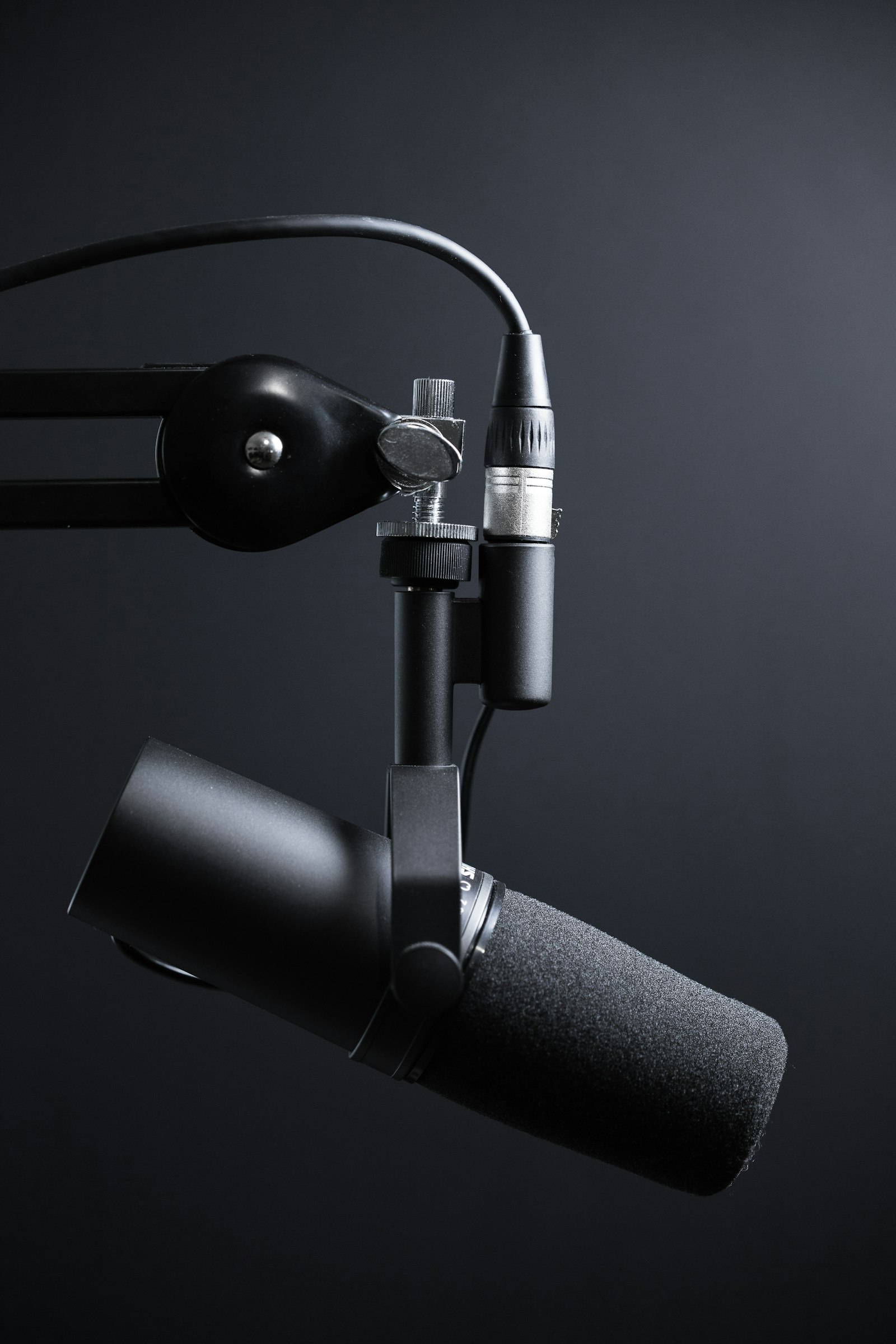
I remember back in 2024 when using a voice assistant felt like talking to a very polite, very confused toddler. You’d ask for a weather report, and it would somehow end up playing a random 90s pop song. Fast forward to 2026, and the landscape of voice interfaces has shifted so dramatically that I often find myself speaking to my computer more than I type. We’ve moved past the novelty phase. We’ve stopped shouting at cylindrical speakers in our kitchens, and we’ve started having actual, nuanced conversations with our digital tools. But even with all this progress, it isn't all sci-fi magic. There’s a lot of fluff to cut through to find what actually makes our lives easier.
The Latency Breakthrough: Why Conversations Feel Real Now
The biggest change I’ve noticed over the last two years isn't actually what the AI says, but when it says it. Latency was the silent killer of voice interfaces for a decade. In the early 2020s, you’d ask a question, there would be a two-second pause while the data traveled to a server and back, and by the time the AI replied, the human rhythm of conversation was broken. In 2026, thanks to edge computing and massive optimizations in model architecture, that delay is gone. It feels instantaneous.
This near-zero latency means we can now interrupt our AI assistants. Think about how humans talk—we jump in, we clarify, we finish each other's sentences. I’ve found that using voice tools for brainstorming sessions is now actually productive because I can say, 'Wait, back up, let’s explore that second point more,' and the AI pivots without missing a beat. This fluidity is what separates the modern voice interface from the clunky 'command-and-response' systems of the past. It’s no longer about giving orders; it’s about collaborating in real-time.

Emotional Intelligence and Prosody: Beyond the Robot Voice
If you’ve checked out the latest updates from pioneers like OpenAI or Anthropic, you’ve probably heard the term 'prosody.' It’s a fancy linguistic word for the rhythm, stress, and intonation of speech. In 2026, voice interfaces don't just understand your words; they understand your tone. If I sound stressed while asking about my schedule, my assistant responds with a calmer, more reassuring cadence. If I’m enthusiastic, it matches that energy.
Some might find this 'emotional mirroring' a bit creepy, and I get that. But from a utility standpoint, it makes the interface much less taxing on the brain. We evolved to communicate through sound and emotion. When a digital voice sounds flat and robotic, our brains have to work harder to process the information. By making these interfaces sound more human, tech companies have effectively lowered the 'cognitive load' of using AI. It feels less like operating machinery and more like talking to a competent colleague who happens to have access to every database on earth.
Contextual Awareness: It Finally Remembers Who You Are
The 'Hype' version of voice AI promised us a Jarvis-like assistant that knew everything about our lives. The 'Reality' in 2026 is getting closer, but it works best within specific ecosystems. For instance, when I use AI meeting assistants, the voice interface doesn't just transcribe; it remembers that three weeks ago I mentioned a specific concern about a project's budget. It brings that context into our current conversation without me having to prompt it.
This long-term memory is powered by RAG (Retrieval-Augmented Generation) systems that are now tightly integrated into voice layers. It’s not just 'smart voice'; it’s 'voice-enabled knowledge management.' However, the friction occurs when you try to move between different apps. My voice-controlled email assistant doesn't always talk perfectly to my voice-controlled coding environment. We are still living in 'walled gardens' to some extent, but within those gardens, the level of personalization is staggering. It knows my preferences, my common mistakes, and even my peculiar shorthand.

Voice in Creative Workflows: More Than Just Dictation
I used to think that voice was only good for short tasks—setting timers or sending quick texts. I was wrong. In 2026, voice is becoming a primary input for complex creative work. I’ve spoken with designers who use voice to manipulate elements in AI image generators. Instead of clicking through endless menus to change a hex code or adjust a lighting angle, they simply say, 'Make the shadows longer and shift the palette toward mid-century modern.'
The same is happening in writing. While I still love the feel of a mechanical keyboard, I’ve started using 'voice-shaping' for my first drafts. I pace around my office, talking through the structure and main arguments of an article, and the AI organizes these thoughts into a coherent outline. It’s not just transcription; it’s an interactive drafting process. The AI will ask me, 'You mentioned the budget earlier, do you want to include that in this section or save it for the conclusion?' This back-and-forth speeds up the creative process by a factor of three because it eliminates the 'blank page' anxiety that hits us all.
The Privacy Wall: Why We’re Still Hesitant
Here is where the hype hits a brick wall: privacy. We were told by 2026 we’d have 'always-on' ambient computing, where the house or office listens and anticipates our needs. In reality, most of us have turned those features off. The psychological barrier of having a device constantly analyzing every sound in a room is higher than tech giants anticipated. We’ve seen a massive surge in 'local-first' voice models that process everything on your device and never send audio to the cloud.
I’ve personally switched to using open-source AI models for my most sensitive voice interactions. I want the power of a voice interface without the feeling that a corporation is eavesdropping on my private life. The industry has responded with physical 'mute' switches that are more prominent than ever and visual indicators that show exactly when the microphone is active. Until we have absolute, verified hardware-level privacy, the 'ambient AI' dream will remain just that—a dream for the few who don't mind living in a digital fishbowl.

The Death of the App Icon? Not Quite.
There was a lot of talk about how voice would kill the traditional graphical user interface (GUI). Predictions claimed that by 2026, we wouldn't use apps; we’d just 'ask the agent.' While it’s true that many tasks have moved to voice, the GUI isn't dead—it’s just changed. We are seeing the rise of the 'Hybrid Interface.' For example, when using AI email tools, I might use voice to summarize my inbox while I’m driving, but I still want a screen to look at a complex spreadsheet or a gallery of photos.
Voice is amazing for high-level intent and navigation. It’s terrible for precise editing of large data sets. I’ve tried to edit a table using just my voice, and it’s a nightmare. 'Change cell C4 to 500... no, I meant D4!' In 2026, the most useful tools are the ones that let you move seamlessly between modalities. Start a task on voice, refine it with a touch screen or mouse, and finalize it with a voice command. The 'voice-only' future was a pipe dream; the 'voice-first' future is our current reality.
Multilingual Mastery and Accents: Breaking the 'Standard English' Bias
One of the most heartening developments in 2026 is how voice interfaces have finally conquered the 'accent gap.' If you didn’t speak with a generic midwestern American accent in 2020, Siri and Alexa often struggled to understand you. Today, the training sets are so diverse that localized dialects and heavy accents are handled with incredible accuracy. This has democratized access to AI tools on a global scale.
I recently watched a colleague in Singapore conduct a meeting where they spoke in a mix of English and Mandarin, and the AI assistant not only tracked the conversation perfectly but provided real-time translation for a participant in Berlin. This isn't just a parlor trick anymore; it’s a fundamental part of how global business operates. The ability to code-switch and understand cultural nuances in speech has turned voice interfaces from 'useful gadgets' into 'essential infrastructure' for international collaboration.
Accessibility: The True Killer App of Voice AI
While many of us use voice for convenience, for the disabled community, these 2026-era interfaces are revolutionary. I’ve seen how voice-to-action systems have given people with limited motor skills complete control over their digital environments. It’s not just about opening an app; it’s about the level of nuance available. Users can now describe complex visual layouts and have the AI navigate them.
Systems like 'Eye-Voice Coordination' allow users to look at an area of the screen and use a voice command to interact with it, creating a lightning-fast workflow that rivals traditional mouse usage. This is where the hype truly matches the reality—the impact on quality of life is immeasurable. When we talk about what's 'actually useful,' this tops the list. It’s a reminder that technology is at its best when it removes barriers rather than adding them.
The Realities of 2026: What Voice Still Can’t Do
Despite everything I’ve praised, there are still major pain points. Voice interfaces are still bad at 'silent environments.' If you’re in a quiet library or an open-plan office, you can’t exactly strike up a lively chat with your AI. 'Silent speech' technology—where sensors detect the micro-movements of your throat without you making a sound—is still in its infancy and mostly impractical for daily use. This limits the social utility of voice interfaces in many public settings.
Then there’s the 'Hallucination' problem. When an AI writes a wrong piece of text, you can skim it and catch the error. When an AI says something wrong with total confidence and a perfect human tone, it’s much easier to believe. I’ve had my voice assistant confidently give me the wrong time for a flight, and because it sounded so 'sure' of itself, I didn't double-check. We have to remain vigilant; just because the interface is more human doesn't mean the underlying data is infallible. Even in 2026, verification is your best friend.
The Human-Centric Future of Interaction
We’ve reached a point where the 'hype' around voice has finally settled into a set of practical, high-value tools. We aren't living in a world where everyone walks around talking to themselves—thankfully—but we are living in one where our digital tools feel much more like an extension of our thoughts. The jump from 2024 to 2026 was less about adding more features and more about making the ones we already had work with the speed and nuance of human thought.
If you haven't recently tried using voice for anything other than a simple search, I highly recommend diving back in. Start by talking through a problem you're stuck on with your favorite LLM, or try navigating your file system through voice commands while you're working on a creative project. You might be surprised at how much friction just disappears when you stop typing and start talking. To keep up with the latest in how these tools are evolving, make sure to subscribe to our newsletter or check out our other deep dives into the AI tools that are actually worth your time.
Key takeaways
- Low latency has transformed voice tools from command-based bots into real-time collaborators.
- Emotional intelligence through 'prosody' allows AI to mirror user tone and reduce cognitive load.
- Context-aware memory enables voice assistants to recall long-term project details across sessions.
- Privacy concerns have spurred the growth of local-first AI and hardware-level 'mute' features.
- The future is a hybrid of voice and graphical interfaces, rather than a total voice takeover.
- Accent and dialect recognition have reached a point of near-universal accessibility.
- Voice is now a primary tool for creative brainstorming and 'shaping' initial drafts.
Frequently asked questions
How has voice latency improved since 2024?
Latency has dropped to near-zero in 2026, allowing for natural, back-and-forth conversations with interruptions, which was nearly impossible with the delayed responses of 2024.
Is ambient voice AI always listening in 2026?
While 'always-on' ambient AI exists, most users prefer local-first models and physical hardware switches to ensure their private conversations aren't being uploaded to the cloud.
Can AI voice interfaces really understand my emotions?
Modern voice AI uses prosody to detect stress, excitement, or frustration in a user's voice and adjusts its own tone and response speed to match the emotional context.
What are the main tasks where voice still fails?
Voice is excellent for high-level intent, brainstorming, and accessibility, but it remains poor for precise data editing, such as manipulating large spreadsheets or complex code bases.
Do voice interfaces still struggle with heavy regional accents?
Yes, 2026 models are highly adept at recognizing non-standard accents and shifting between multiple languages in a single conversation, making them much more inclusive globally.
External resources

About the author
Ahmed Bahaa Eldin
Staff Writer at ToolMind AI
Ahmed Bahaa Eldin covers the AI tools changing how teams and individuals work. His reporting blends hands-on testing with practical insights for professionals looking to get more done. Have a tip or product to recommend? Reach the team via the contact page.
Related articles
Open-Source AI Models in 2026: Llama, Mistral, Qwen, and the State of the Art
Open-source AI keeps closing the gap. Here's where Llama 4, Mistral, Qwen 3, and DeepSeek really stand against GPT‑5 and Claude 4 in 2026 — and where they win.
AI Regulation in 2026: A Builder's Guide to the EU AI Act, US Rules, and What Ships
The EU AI Act is in force. The US is shifting. The UK and Asia have their own takes. Here's what builders shipping AI products in 2026 actually need to do.
What the GPT-5 Release Actually Changed for Everyday Users
The GPT-5 release has finally landed, moving beyond the hype into our daily routines. We explore how this new model shifts from simple chat to proactive agency, fundamentally changing how we work, code, and create in a post-hallucination world.