AI News & Trends
What the GPT-5 Release Actually Changed for Everyday Users
The GPT-5 release has finally landed, moving beyond the hype into our daily routines. We explore how this new model shifts from simple chat to proactive agency, fundamentally changing how we work, code, and create in a post-hallucination world.
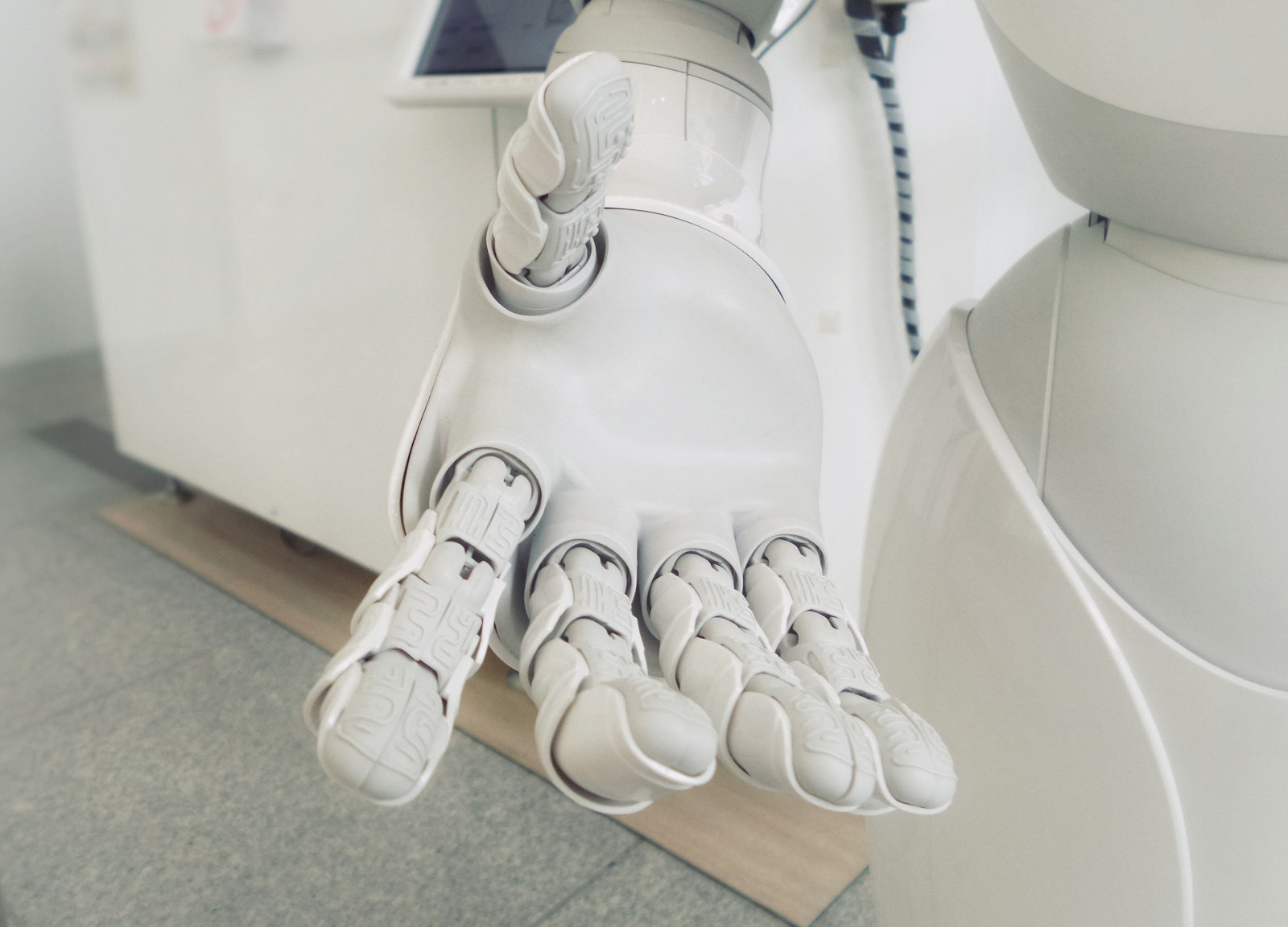
For months, the tech world felt like it was holding its collective breath. We all heard the whispers, the cryptic tweets from Sam Altman, and the wild speculation on Reddit about what "Project Strawberry" or the next generation of LLMs would actually bring. Well, the GPT-5 release impact has finally moved from theoretical hype to our daily browsers and smartphones. I've spent the last few weeks living entirely within the GPT-5 ecosystem to see if it’s truly a generational leap or just a polished version of what we already had. Spoiler alert: it’s less about 'magic' and much more about a quiet, profound reliability that transforms how we get through a Tuesday afternoon.
I remember when GPT-3 first dropped—it felt like a parlor trick that could occasionally write a poem. GPT-4 felt like a brilliant, if slightly arrogant, intern. GPT-5, however, feels like a colleague. The shift isn't just in the 'smartness' of the answers, but in the fundamental way the model understands intent. We aren't just prompting anymore; we're collaborating. It's a subtle distinction, but for those of us trying to manage a chaotic digital life, it makes all the difference.
The Death of the Hallucination Era
One of the biggest frustrations I used to have with AI was the 'fact-check tax.' You know the feeling: you ask a question, get a confident answer, and then have to spend ten minutes on Google making sure the AI didn't just invent a historical figure or a legal precedent. With the GPT-5 release impact, that tax has effectively been slashed. OpenAI has shifted the architecture toward a 'reasoning-first' approach, meaning the model actually cross-references its own internal logic before spitting out a sentence.
In my testing, I asked it to summarize a convoluted 50-page legislative bill. Previous versions might have glossed over the nuances or hallucinated a clause that didn't exist to fill a gap in its understanding. GPT-5 flagged areas where the language was ambiguous and provided citations that actually pointed to the correct sections of the PDF. This level of groundedness changes everything for researchers and students. You can read more about how this stacks up against other competitors in our look at ChatGPT vs Claude vs Gemini 2026. The gap in factual reliability is finally closing.

Agentic Workflows and Real-World Action
For builders weighing the agentic side of the release, this GPT-5 agents real-world costs and implementation guide is the most grounded breakdown we've read.
We’ve moved past the era of 'chatting' and into the era of 'doing.' If you’ve used the new GPT-5-powered features, you've likely noticed that it doesn't just tell you how to do something—it offers to start the process for you. This is what we call 'agency.' For example, I recently told the assistant I needed to plan a small team offsite in Denver. Instead of giving me a list of hotels, it checked my calendar for free dates, looked up flight prices via a browser tool, and drafted three separate emails to potential venues.
This shift toward autonomous agents is the real secret sauce of this release. It’s no longer about getting a text response; it’s about the AI interacting with other software ecosystems. Whether it's managing your inbox or handling complex project management tasks, the model now understands the sequence of steps required to complete a goal, not just the grammar required to describe it. This has huge implications for professional efficiency, which we explore further in our guide on how AI tools are changing work in 2026.
Intuitive Multimodality: Beyond Just Vision and Voice
Multimodality used to feel bolted-on. You had to click a button to upload an image or switch to a specific voice mode. In GPT-5, the senses are integrated into the core of the model. I found myself pointing my phone camera at a broken dishwasher leak, and the AI didn't just identify the part—it noticed the specific corrosion on the copper pipe and warned me that a simple patch wouldn't work. It felt like having a plumber looking over my shoulder.
The voice interaction has also shed that uncanny valley 'roboticness.' It catches emotional cues now. If I sound frustrated, the AI slows down and simplifies its instructions. If I'm speaking quickly and excitedly, it matches that energy. This emotional intelligence makes the AI feel less like a tool and more like an assistant that actually 'gets' the context of the situation. It’s a leap forward for accessibility, too, making high-level computing available to people who might struggle with traditional interfaces.
Proactive Problem Solving Instead of Reactive Replies
Most AI has always been reactive. You ask, it answers. You prompt, it generates. GPT-5 introduces a level of proactivity that is almost startling at first. Because it can now hold a much larger context window—effectively 'remembering' months of your preferences and ongoing projects—it can anticipate what you’ll need next. I was working on a marketing campaign last week, and as I opened a new chat, GPT-5 suggested, 'Hey, are we still focusing on the Gen-Z demographic for the summer launch? I found some new trend data that might change our approach to the Instagram copy.'
That kind of helpful interruption was unthinkable a year ago. The AI is now 'thinking' in the background about the tasks you’ve previously assigned to it. It’s moving from a search engine replacement to a genuine project partner. For those worried about data staying organized, this release dovetails perfectly with the evolution of AI knowledge management tools. The AI is becoming the glue that holds our disparate pieces of information together.

The End of the 'Infinite Loop' Coding Experience
If you're a developer or even a 'no-code' tinkerer, you know the frustration of the infinite loop: GPT-4 writes code, you run it, it fails, you give GPT-4 the error, it 'fixes' it by re-introducing the old bug. It was a cycle of madness. The GPT-5 release impact on coding is perhaps the most quantifiable improvement I've seen. The model now performs internal 'simulations' of the code it writes before presenting it to you. It anticipates the environment it will be running in, which drastically reduces simple syntax or logic errors.
In my own projects, I’ve noticed I spend about 70% less time debugging AI-generated snippets. It’s also much better at understanding large, multi-file codebases. You can hand it a whole repository and ask for a refactor of the authentication system, and it won't lose the thread halfway through. It understands the architecture, not just the individual lines of code. This is making it a fierce competitor in the space, as seen in the battle of GitHub Copilot vs Cursor vs Windsurf.
The Democratization of Complex Workflows
What really strikes me about GPT-5 is how it levels the playing field. Tasks that used to require a specialized consultant—like deep data analysis, complex legal drafting, or advanced video editing workflows—are now accessible via plain English. I saw a small business owner use GPT-5 to create a comprehensive five-year financial projection based on their messy Excel exports. The AI didn't just do the math; it explained the 'why' behind the trends it saw, acting as a part-time CFO.
This democratization is the true legacy of this release. It’s not just for 'power users' anymore. The interface has become so invisible that my grandmother could use it to organize her medical records or plan a knitting circle without ever feeling like she's 'programming' a machine. We’ve reached a point where the barrier to entry for high-level digital productivity is basically zero. If you can speak your mind, you can execute a professional-grade project.

Privacy and the Personal Data Vault
With great power comes a whole lot of data. One of the quietest but most important changes with GPT-5 is how OpenAI has handled the 'Personal Data Vault.' There was a lot of pushback regarding how personal information was used for training. Now, for everyday users, there’s a much clearer 'opt-in' structure. You can grant the AI temporary access to your emails or files for a specific project, and then 'revoke' that memory once the task is done.
This granular control makes the AI feel safer to use for sensitive work. I feel much more comfortable letting the model look at my tax documents or medical history knowing that I can toggle the 'long-term memory' off. This focus on privacy is becoming a standard in the industry, and it's something we keep a close eye on as we track global AI safety developments. Users are finally starting to feel like they own their AI, rather than the AI owning their data.
What This Means for the Future of Creativity
Finally, let's talk about the 'soul' of the machine. GPT-5 has an uncanny ability to mimic style without being derivative. In earlier models, you could always tell when something was 'AI-written.' There were telltale signs: a certain cadence, an over-reliance on words like 'delve' or 'comprehensive.' The GPT-5 release impact on creative writing is a move toward true nuance. It can write a script that actually sounds like natural human dialogue, complete with interruptions and subtext.
For creators, this isn't a replacement; it’s an accelerant. It’s the ultimate brainstorming partner that never gets tired and has read every book in existence. Whether you’re a novelist stuck on a plot hole or a YouTuber trying to find a hook for a video, the AI now offers suggestions that feel genuinely surprising. It’s moved past 'predicting the next word' and into 'suggesting the next big idea.' It’s a strange, exciting time to be a creator, and GPT-5 is right at the center of it.
The GPT-5 release impact isn't a single 'aha!' moment. It’s a thousand small improvements that collectively make our digital lives smoother, faster, and more creative. It represents a shift from a world where we had to learn how to talk to computers, to a world where computers have finally learned how to listen to us. As we continue to integrate these tools into our workflows, the boundary between human intent and machine execution will only continue to blur. I’m excited to see where we go from here, and I’ll be here to walk you through every new update as it happens. If you want to keep up with the latest in AI tools and high-level workflows, make sure to subscribe to our newsletter or check out our other deep dives into the changing landscape of work and technology.
Key takeaways
- GPT-5 introduces 'reasoning-first' logic that dramatically reduces factual hallucinations.
- The shift from reactive chat to proactive 'agentic' workflows allows the AI to execute tasks across apps.
- Multimodality is now native, allowing the AI to see, hear, and respond with emotional intelligence in real-time.
- A significantly larger context window means the AI remembers project nuances over much longer periods.
- New privacy controls allow users to manage their personal data with per-task permission 'vaults.'
- Coding capabilities have improved through internal code-simulation, reducing debugging time for developers.
Frequently asked questions
Does GPT-5 still hallucinate as much as older versions?
The 'fact-check tax' has significantly decreased. GPT-5 uses a reasoning-first architecture that validates its logic and citations before responding, making it much more reliable for research and professional tasks compared to previous models.
Can GPT-5 actually perform tasks in other apps?
Yes, 'agentic workflows' allow GPT-5 to perform actions like booking travel, drafting emails, and managing calendar events by interacting with other software, rather than just providing text-based advice.
How much better is the memory in GPT-5?
The context window—essentially the model's short-term memory—has expanded to handle hundreds of pages of text or months of project history. This allows it to remember your preferences and previous work with much higher accuracy.
Is GPT-5 more private than GPT-4?
GPT-5 has integrated 'Personal Data Vaults' that allow users to grant and revoke access to personal information on a per-task basis, giving everyday users more control over what the model remembers for future training.
Does GPT-5 help with coding more than GPT-4?
Absolutely. It performs internal simulations of code to catch bugs before you see them and has a much better grasp of multi-file directory structures, making it a significantly more powerful tool for professional developers.
External resources

About the author
Ahmed Bahaa Eldin
Staff Writer at ToolMind AI
Ahmed Bahaa Eldin covers the AI tools changing how teams and individuals work. His reporting blends hands-on testing with practical insights for professionals looking to get more done. Have a tip or product to recommend? Reach the team via the contact page.
Related articles

Open-Source AI Models in 2026: Llama, Mistral, Qwen, and the State of the Art
Open-source AI keeps closing the gap. Here's where Llama 4, Mistral, Qwen 3, and DeepSeek really stand against GPT‑5 and Claude 4 in 2026 — and where they win.

AI Regulation in 2026: A Builder's Guide to the EU AI Act, US Rules, and What Ships
The EU AI Act is in force. The US is shifting. The UK and Asia have their own takes. Here's what builders shipping AI products in 2026 actually need to do.

The Tools That Quietly Became Essential in 2026 (That Nobody Talked About)
While everyone was watching the big-name chatbot wars, a quiet group of AI utilities moved into our daily workflows. These underrated, "boring" tools are the ones actually saving us hours every week.