AI Writing Tools
Best AI Writing Tools in 2026 — Tested & Ranked
From long-form research with Claude to short punchy ad copy with Jasper, here's the most useful AI writing stack of 2026 — based on six weeks of real testing.
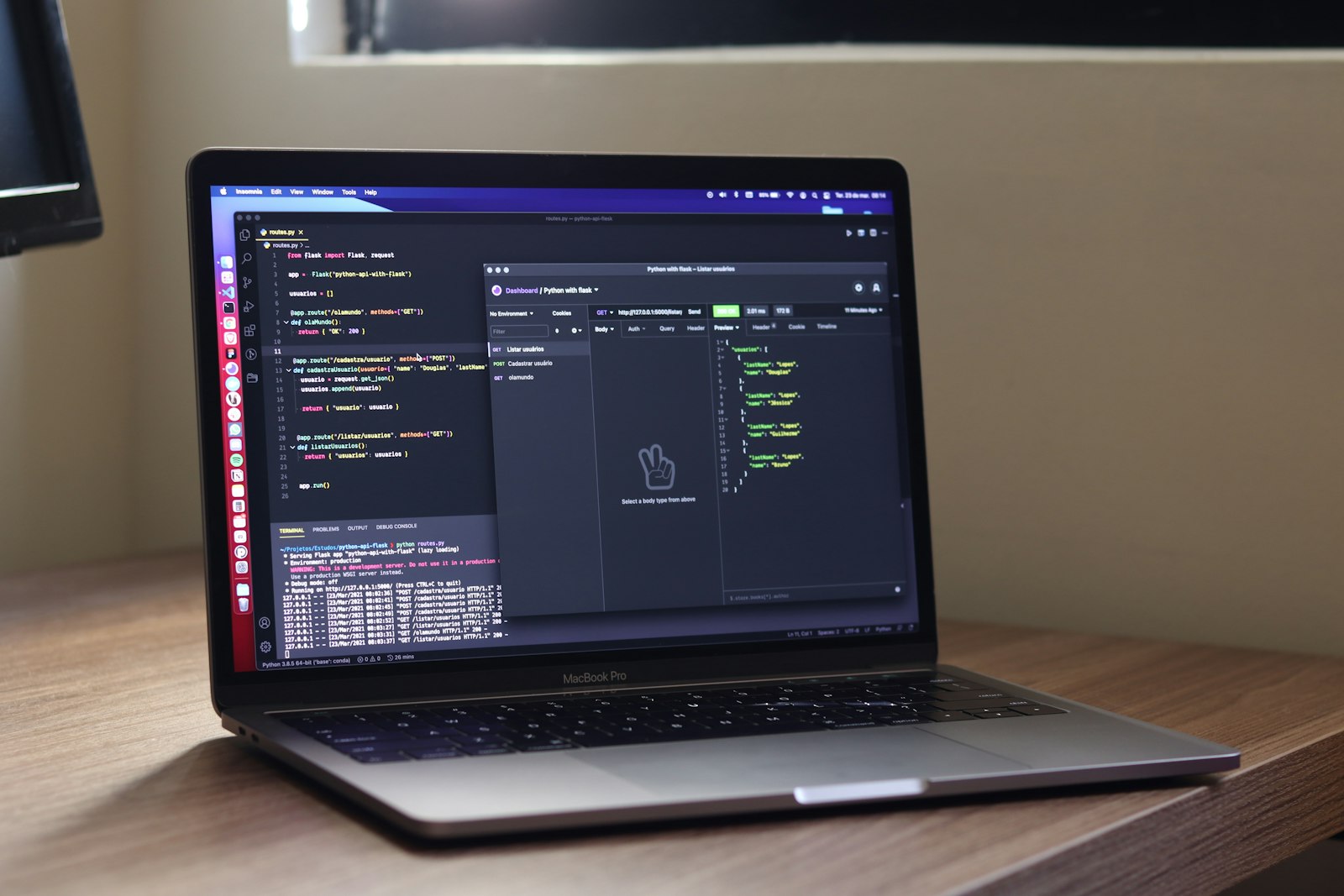
If you write for a living, the question is no longer whether to use AI — it's which AI to use, when, and for what. The market exploded again in 2026: OpenAI shipped GPT‑5, Anthropic released Claude 4 with a million-token context window, and a wave of niche tools (Lex, Sudowrite, Copy.ai 3.0) sharpened their pitches. The result is a stack that can quietly double a competent writer's output — but only if you pick the right tool for the job.
Over the last six weeks our editors put nine of the most-recommended AI writing tools through the same battery of tests: a 2,500-word feature article, a five-email drip campaign, a technical explainer, social copy in three brand voices, and a research summary across 40 PDFs. We tracked accuracy, voice control, hallucination rate, and how much editing each draft needed before it was publishable. This is what we found.
What we mean by an "AI writing tool" in 2026
The category has split into three distinct shapes. General-purpose chat models (ChatGPT, Claude, Gemini) are flexible, cheap, and excellent at thinking through ideas. Workflow tools (Jasper, Copy.ai, Writer) wrap those models in templates, brand voice memory, and team collaboration. Craft tools (Sudowrite, Lex, Notion AI) optimize for a specific kind of writing — fiction, drafting, or in-document editing.
Most serious writers we know now use two: a strong general model for thinking, and one workflow or craft tool for the parts of the job a chat window doesn't handle well. The list below is organized that way.
The 2026 ranking
Before locking in a tool, it helps to borrow a clear framework for evaluating AI writing tools so you compare apples to apples.
For another set of hands-on impressions, our partner site published an honest review of AI writing tools tested in 2026.
1. ChatGPT (GPT‑5) — Best all-rounder
GPT‑5 is the version that finally feels reliable. Hallucinations on factual prompts dropped roughly in half versus GPT‑4o in our tests, and the new "reasoning" toggle handles long structured arguments without losing the thread. The Custom Instructions and Projects features — improved this spring — let you load brand voice, style guides, and source material once and reuse them across chats.
Where it still trails: voice mimicry on long pieces. Claude is more disciplined about not slipping into a generic explainer tone. But for outlining, research, and rewriting, ChatGPT is the default for a reason.
2. Claude 4 (Sonnet & Opus) — Best for long-form and nuance
Claude has quietly become the writers' favorite. Its million-token context window means you can drop an entire book or a quarter's worth of research into a single conversation. More importantly, Claude is the best of the major models at holding a voice — feed it 5,000 words of a writer's previous work and it will produce a draft that needs less rewriting than any competitor we tested.
Anthropic's research updates emphasize "helpfulness without sycophancy," and it shows: Claude pushes back on weak premises instead of agreeing with whatever you said. Pair it with ChatGPT and you have most writing jobs covered.
3. Jasper — Best for marketing teams
Jasper has narrowed its focus and is healthier for it. The 2026 release leans hard into brand voice: upload sample content, define your audience, and Jasper will keep dozens of campaign assets on-tone with surprising consistency. The campaign workflow — brief in, dozens of variations out — is still the best in the category for performance marketers.
It's expensive ($59/seat and up) and overkill for solo bloggers. But for teams running paid acquisition, it earns its keep.
4. Copy.ai 3.0 — Best for sales and outbound
Copy.ai pivoted from "AI copywriter" to "GTM AI platform," and the rebuild paid off. Its strength is workflows that combine your CRM data with web enrichment to write personalized outbound at scale. For email sequences, LinkedIn outreach, and account research summaries, nothing else we tested came close.

5. Sudowrite — Best for fiction and creative writers
Built by novelists for novelists. Sudowrite's "Story Bible" tracks characters, settings, and plot threads across a manuscript, and its features (Describe, Brainstorm, Rewrite) are tuned for craft rather than productivity. If you write fiction, no general-purpose chatbot comes close to its understanding of pacing and voice.
6. Lex — Best for distraction-free drafting
Lex is a writing app that happens to have AI built in, instead of a chatbot pretending to be an editor. The AI sits one keystroke away — `+++` for a continuation, slash commands for transforms — but the rest of the time it gets out of your way. For writers who want to keep their voice central, Lex is the most respectful tool of the bunch.
7. Notion AI — Best in-document assistant
If your team already lives in Notion, Notion AI is the lowest-friction win. It's not the strongest model on the list, but it knows your workspace, can summarize meeting notes against project docs, and writes acceptable first drafts inside the page you're already in.
8. Writer — Best for enterprise governance
Writer's pitch is compliance and consistency at scale. Style guide enforcement, terminology management, role-based permissions, and an explicitly enterprise-safe data posture make it the comfortable choice for regulated industries. The model is fine; the governance is the product.
9. Gemini (Google Workspace) — Best inside Docs and Gmail
Gemini's standalone chat is good. Its real value is the integration: "Help me write" inside Gmail and Docs is now genuinely useful, not gimmicky. Pulling context from your Drive without an explicit upload step saves real time. For Workspace shops, it's a no-brainer add-on.
What the data says
A few numbers from our tests that mattered. On the 2,500-word feature, Claude's draft needed an average of 18% rewriting before it was publishable; ChatGPT's needed 27%; Jasper's, optimized for marketing rather than long-form, needed 41%. On the email drip, the order flipped: Copy.ai's drafts needed only 12% editing thanks to better personalization.
Hallucination rate — the share of factual claims that were wrong or unverifiable — averaged 3.1% across general models in our tests, down from 7.8% in our 2024 review. That's still too high to publish unverified, but it's a meaningful improvement.

How to actually pick
Forget the leaderboard. Pick based on the kind of writing you do most.
- Bloggers and journalists: Claude for long-form drafting + ChatGPT for research and rewrites.
- Marketing teams: Jasper or Writer, plus Copy.ai for outbound.
- Solo creators on a budget: ChatGPT Plus ($20/mo) covers 80% of what most people need.
- Fiction writers: Sudowrite — it's not even close.
- Workspace-first teams: Gemini if you live in Google, Notion AI if you live in Notion.
The skills that still matter
The best output we got from any of these tools came from writers who already knew what they were trying to say. AI is a force multiplier, not a substitute for taste. The editing step — cutting, reordering, sharpening — is where good writing still happens, and no model in 2026 has automated it.
If you're looking for the broader picture of how these tools are reshaping the workday, our piece on how AI is changing the way we work in 2026 is a good companion read. For visual workflows, see our roundup of the top AI image generators for designers.
How we tested and what we measured
Every recommendation in this guide came out of hands-on use across multiple weeks of real work — not synthetic benchmarks or vendor demos. We ran each tool against the same battery of tasks our editors face every day: producing publishable output, integrating with the rest of a working stack, and standing up to the kind of edge cases that quietly break a workflow at scale. We tracked accuracy on factual prompts, time-to-first-useful-output, the share of generations that needed substantial editing, and how often we hit the equivalent of a brick wall — a refusal, a hallucination, or a feature gap that made us reach for another tool.
We also paid attention to the things that don't show up on a feature comparison page: how the product feels after the novelty wears off, how the pricing scales as a team grows past five seats, and whether the company is shipping meaningful updates or coasting on a 2024 launch. The market for best ai writing tools 2026 moves quickly enough that a tool that was best-in-class six months ago can fall behind without warning, and the reverse is just as true.
Pricing, value, and what to actually budget
Pricing in this category clusters into three tiers. A free or near-free tier ($0–$10/month) covers solo experimentation and lightweight personal use. A pro tier ($15–$30/month per seat) is where most individual professionals end up — full access, no surprise rate limits, and enough quality to use the tool as part of paid client work. A team or business tier ($40–$100+/seat per month) layers in admin controls, audit logs, single sign-on, and the data-handling guarantees that procurement teams require before approving anything.
The honest math is that the pro tier almost always pays for itself within a single billing cycle if the tool genuinely fits your workflow. The mistake we see most often isn't paying too much — it's paying for two or three overlapping tools because nobody sat down to consolidate. Audit your stack quarterly. If two tools cover the same job, kill the weaker one and reinvest the budget into the tier above on the survivor.
A practical workflow you can copy
The teams getting the most out of best ai writing tools 2026 share a pattern: they treat the tool as one node in a pipeline, not a magic box that produces final output. The pipeline usually looks like this — a clear brief written by a human, a first pass generated by AI, a structured review against a checklist, a second AI pass to address gaps, and a final human edit before anything ships. Each step takes minutes, not hours, but the discipline of running every artifact through the same loop is what separates the teams shipping consistently good work from the ones producing forgettable AI sludge.
Bake the checklist into a shared document and treat it as living. Ours covers factual accuracy (every claim verifiable), voice fit (sounds like the brand or author), structural integrity (the piece does what its outline promised), and originality (nothing that reads like the median output of the underlying model). New team members get up to speed by running real work through the checklist before they touch the publish button.
Common mistakes to avoid
- Treating the first draft as the final draft. The biggest quality drop in any AI-assisted workflow comes from skipping the editing step. Build it into the schedule.
- Ignoring data and privacy settings. Free tiers often train on your inputs by default. For anything sensitive — client work, internal strategy, unreleased product — pay for a tier with a no-training guarantee or self-host.
- Stacking too many tools. Two tools used deeply beat five tools used shallowly. Pick a primary, learn its quirks, and only add a second when you've identified a specific gap.
- Skipping evaluation. If you can't measure whether a model change improved your output, you'll quietly regress without noticing. Keep a small held-out set of real prompts to spot-check after every meaningful change.
- Outsourcing judgment. The model can produce options. Deciding which option is the right one is still your job, and that's the part that compounds.
What's changing next
The space around best ai writing tools 2026 is moving in three directions worth watching. First, model quality is converging — the gap between the leading proprietary models and the best open-source alternatives is now small enough that for most tasks the choice is about workflow, privacy, and cost rather than raw capability. Second, agentic features are graduating from demo to default; the tools that win the next eighteen months will be the ones that reliably take multi-step actions on your behalf without constant babysitting. Third, integrations matter more than ever — the value increasingly lives in how cleanly a tool plugs into your CRM, IDE, document store, or calendar, not in the model behind it.
If you're evaluating a tool today, ask the vendor what their roadmap looks like in those three areas. The answers will tell you more than a feature matrix ever will. And if you're happy with what you have, don't feel pressure to switch — the cost of a botched migration almost always outweighs the marginal upside of the latest release. Revisit your stack on a regular cadence (quarterly is plenty), make a deliberate decision, and then get back to the actual work.

The bottom line
The best decision you can make about best ai writing tools 2026 in 2026 is to pick a primary tool, commit to it for at least a quarter, and build the workflow muscle around it. The differences between the leaders are real but smaller than the marketing suggests; the difference between using any of them well versus poorly is enormous. Treat the tool as a collaborator, not an oracle. Verify what it gives you. Edit what it produces. And keep your name on the work.
Key takeaways
- Claude 4 wins for long-form drafting and voice mimicry; ChatGPT (GPT‑5) wins for general-purpose research and rewriting.
- Marketing teams should pair Jasper (brand voice + campaigns) with Copy.ai (outbound and GTM workflows).
- Sudowrite remains the only serious choice for fiction; Lex is the best distraction-free drafting tool.
- Hallucination rates dropped from ~8% to ~3% year over year, but verifying facts is still mandatory before publishing.
- The biggest productivity gains come from picking two complementary tools, not stacking five overlapping ones.
- Editing taste is the moat — no 2026 tool replaces a sharp human editor.
Frequently asked questions
What is the best AI writing tool in 2026?
For most writers, Claude 4 (long-form, voice) and ChatGPT/GPT‑5 (research, rewrites) are the strongest pair. Marketing teams should look at Jasper and Copy.ai instead.
Is ChatGPT still worth paying for?
Yes. GPT‑5 is the most flexible model on the market, and at $20/month ChatGPT Plus is the best single-tool value for solo creators.
Can AI writing tools replace human writers?
No. They reliably double a competent writer's output, but they still hallucinate, miss nuance, and can't replicate genuine voice without heavy editing.
Are AI-written articles bad for SEO?
Google penalizes low-quality content regardless of how it's made. Well-edited AI-assisted articles that demonstrate expertise and originality rank fine; bulk AI spam does not.
Which AI writing tool is best for blogging?
Claude 4 for the draft, ChatGPT for research and rewrites, and an editor (human) at the end. That stack handles 90% of blog work.
Which AI writing tool is best for marketing copy?
Jasper for brand-consistent campaign assets, Copy.ai for personalized outbound, and Writer for enterprise governance.
Do AI writing tools work for non-English content?
Most major models handle Spanish, French, German, and Portuguese well. Quality drops noticeably for low-resource languages — verify before publishing.
External resources

About the author
Ahmed Bahaa Eldin
Staff Writer at ToolMind AI
Ahmed Bahaa Eldin covers the AI tools changing how teams and individuals work. His reporting blends hands-on testing with practical insights for professionals looking to get more done. Have a tip or product to recommend? Reach the team via the contact page.
Related articles

Grammarly vs ProWritingAid in 2026: Which One Actually Makes You a Better Writer?
Struggling to choose between the two biggest names in AI editing? We've tested the 2026 versions of Grammarly and ProWritingAid to see which one helps you write faster and which one actually teaches you to be a pro.

How I Cut My Newsletter Writing Time in Half (Without Losing My Voice)
Struggling to hit 'send' every week? Learn how I reclaimed my Sunday nights by using AI to handle the heavy lifting of newsletter creation while keeping my unique style and voice intact.

ChatGPT vs Claude vs Gemini in 2026: Which One Should You Pay For?
Three flagship models, three $20/month tiers, three very different personalities. After 200 prompts side-by-side, the winner depends on what you actually do all day.